Nikon 1 J1 review in 2026 ★★★☆☆
This is a compact mirrorless camera with a 1-inch sensor, hybrid phase/contrast AF, a fully electronic shutter and the ability to shoot at 60fps... in 2011!

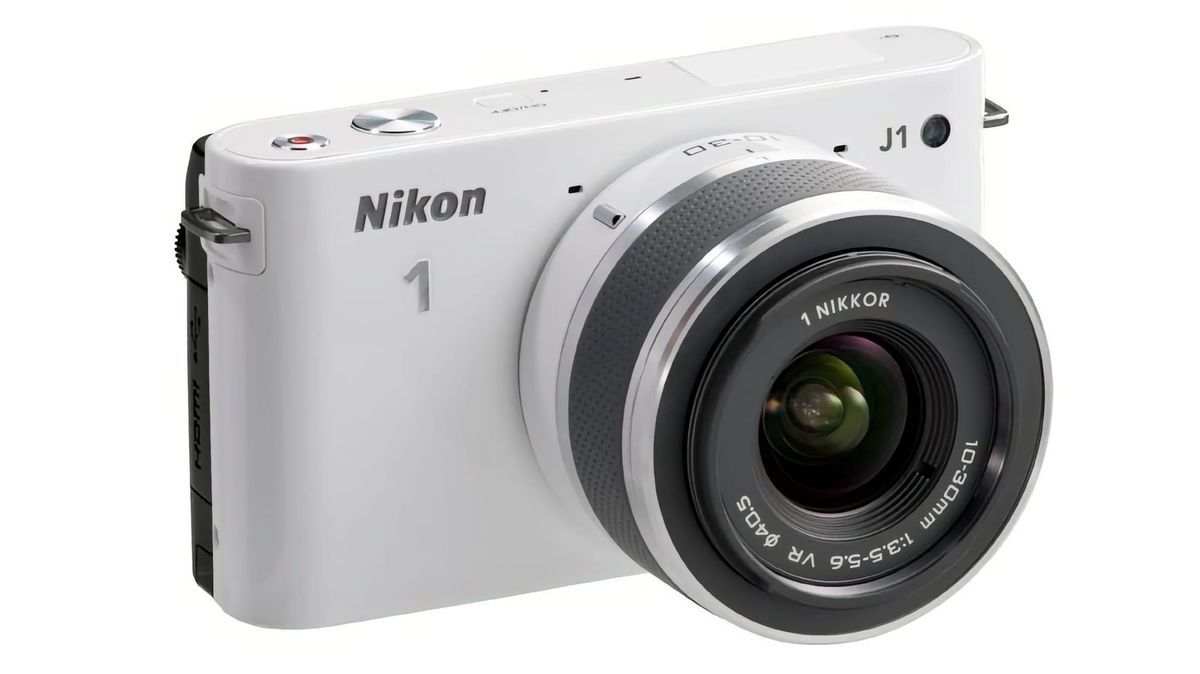
This is a compact mirrorless camera with a 1-inch sensor, hybrid phase/contrast AF, a fully electronic shutter and the ability to shoot at 60fps... in 2011!
Nikon launched the 1 series in 2011, introducing the Nikon 1 J1, a basic point and shoot model, and the more advanced Nikon 1 V1. The V1 had an electronic viewfinder, a bigger battery and a mechanical shutter.
Both shared the same 10-megapixel 'CX' format 1-inch sensor, and both shared breathtakingly elegant, minimalist designs. Only Leica has ever made cameras that look as classy as this.
I tested the Nikon 1 V1 when it first came out, and I bought a Nikon 1 J1 almost immediately afterwards. I still have it today and it works perfectly, as if it had just left the factory.
I prefer the V1 for its EVF and better battery, but it cost a lot more and the J1 wins for size, cost and elegance.
But how does a camera launched 15 years ago stack up today?
Nikon 1 J1 specifications
- Lens mount: Nikon CX
- Sensor: 1-inch type
- Resolution: 10.1MP
- ISO range: 100-3200
- Autofocus: 73-point hybrid phase/contrast AF
- Video: 1080 30p or 60i
- Continuous shooting: 10fps with AF, 60fps with focus locked on first frame
- Shutter: Electronic, 30sec-1/16,000sec
- Viewfinder: No
- Rear screen: Fixed, 3-inch, 460k dot
- Storage: 1x SD/SDHC/SDXC UHS I
- Battery: EN-EL20, 230 shots
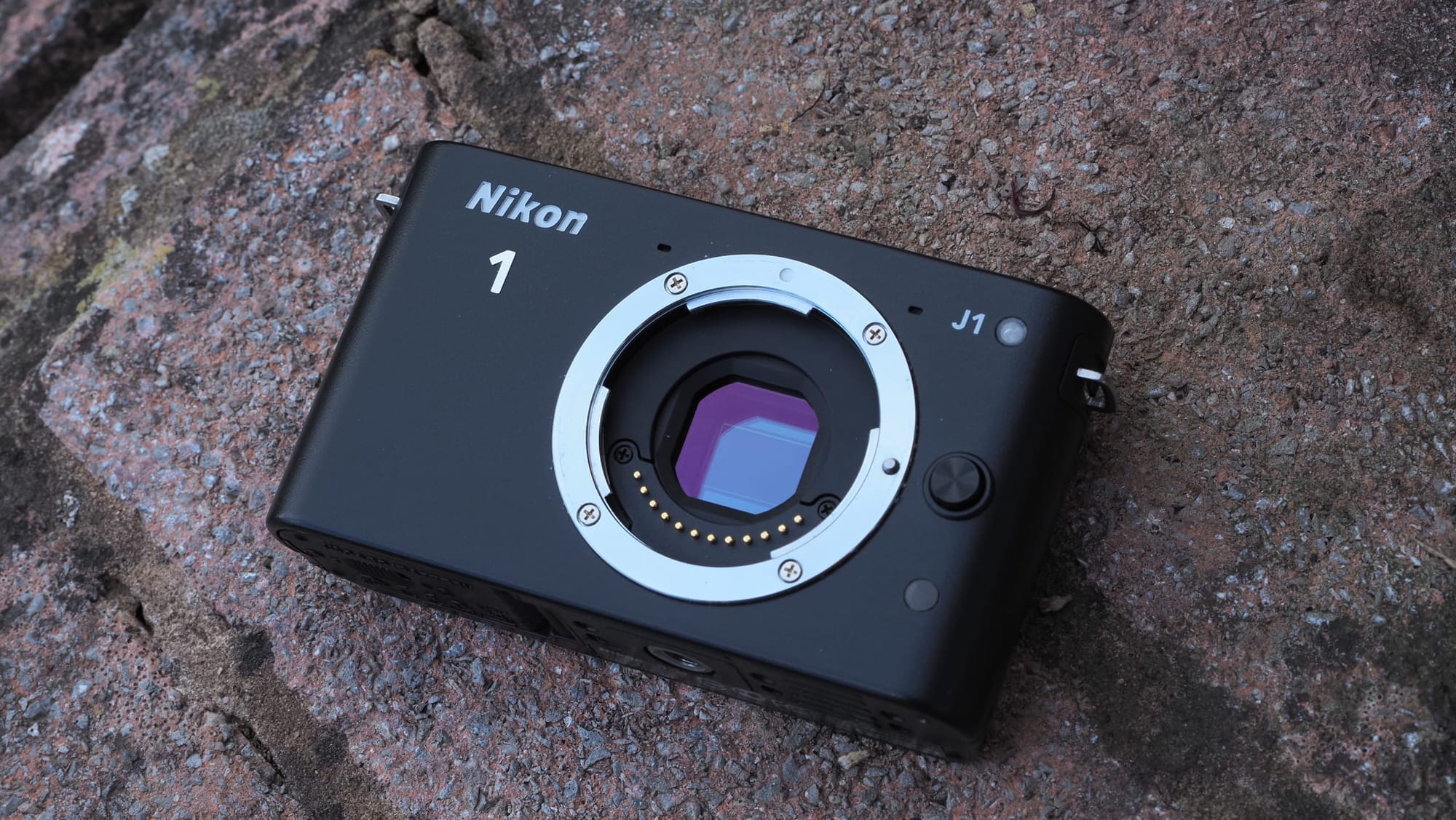
Let's deal with the elephant in the room. Is 10MP enough in 2026? With an image size of 3872 x 2592, it's actually almost the same as 4K UHD, so it will still fill the screen on a 4K monitor and produce a 13-inch wide print at 300dpi. You decide. But if you're creating images for digital sharing and display and mid-size prints, then it's easily enough.
This is not a camera for video creators, though. The 1080 resolution is one issue, the fixed screen another. The Nikon 1 J1 will shoot perfectly usable video for YouTube and social, but if this is a key thing for you then there are countless more recent cameras that will do the job better.
Nikon 1 J1 handling
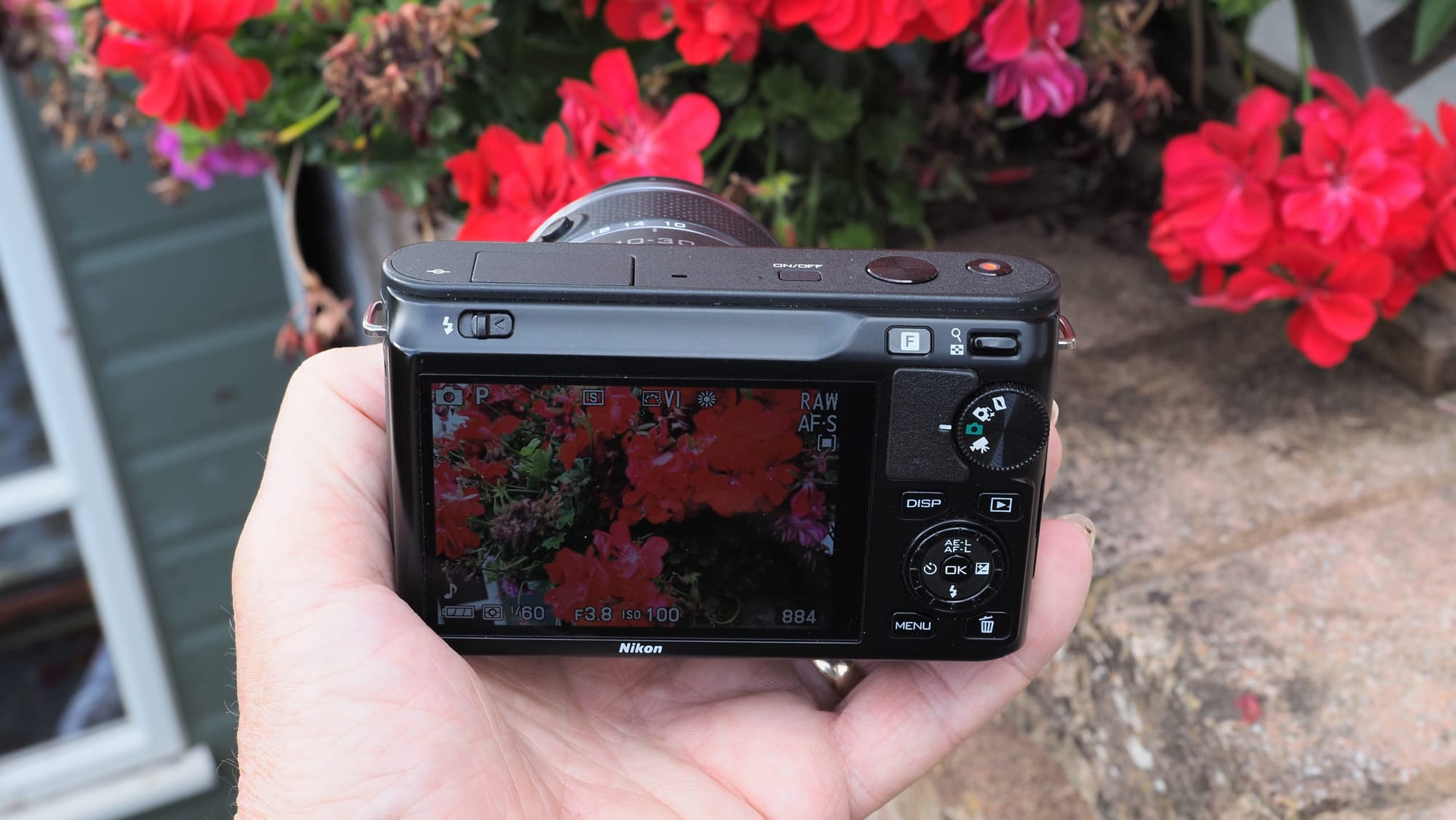
The Nikon 1 J1's handling does take a little getting used to. It's small and it looks wonderful – it also slips beautifully into a coat pocket. But there's not a lot to hold on to, so a wrist strap is a good idea.
There's no PASM mode dial. That's odd compared to modern cameras. Instead, you have to use the menus to swap between P, A, S and M modes. It's no great ordeal, and you probably have a favorite mode anyway that you'll stick with.
Nikon was trialling high-speed capture with this camera, and there's a Motion Snapshot mode a bit like iPhone Live Photos that you probably won't use, and a Smart Photo Selector mode that takes a bunch of shots and shows you what it thinks is the best. You might not use that either – but it shows Nikon was thinking outside the box and was making an effort to anticipate a new audience.
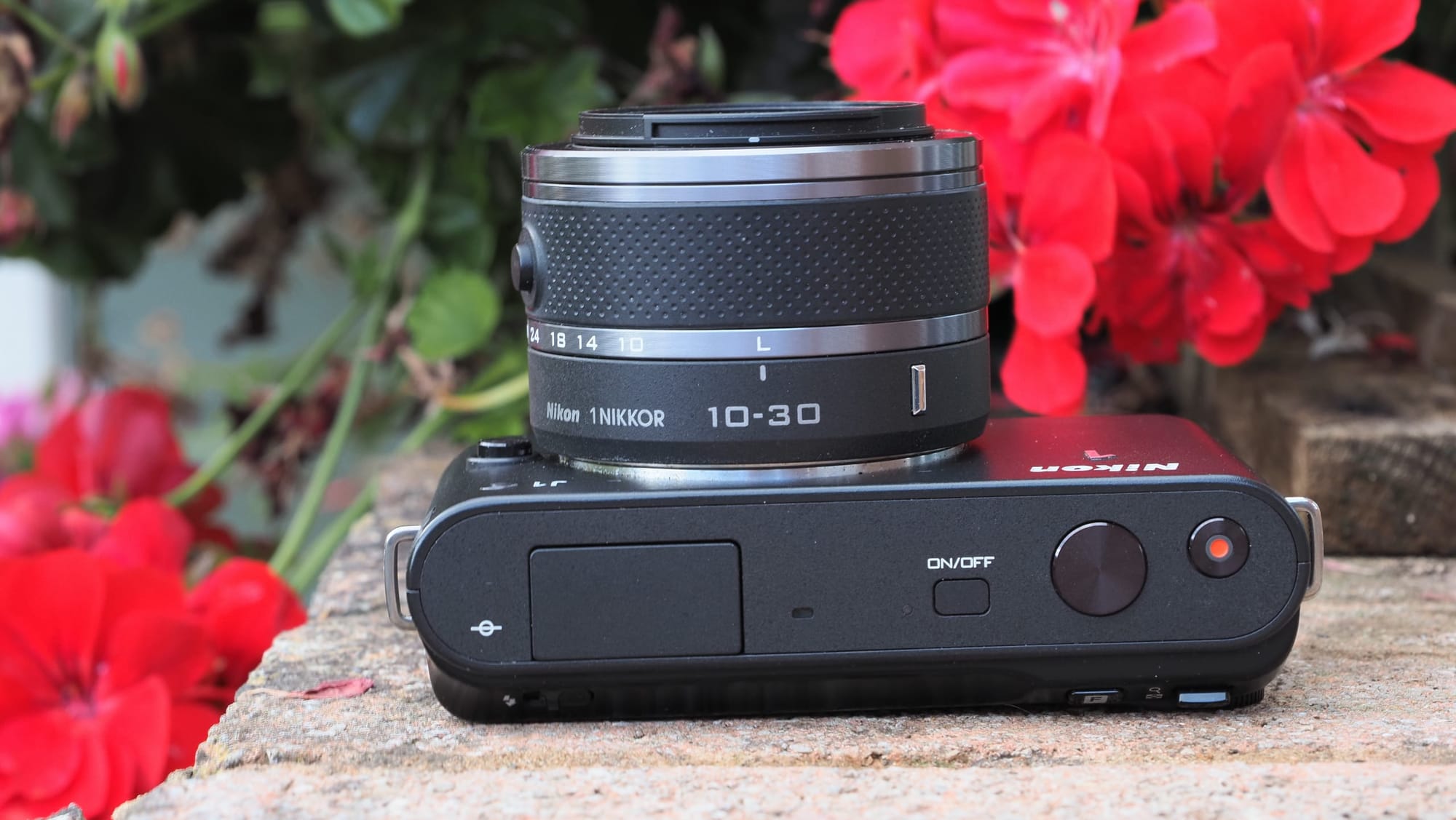
The kit lens for the Nikon 1 J1 is the 10-30mm f/3.5-5-6 – a 27-81mm equivalent 3x zoom – that has a retracting design, so you have to press a button and rotate the zoom ring to ready it for use. Even when it's retracted, though, this lens does have a slightly too-big-for-the-body feel. The J1 is commendably small, but perhaps too small.
I also have the Nikkor 1 10mm f/2.8 (27mm equivalent) which makes the camera more pocketable and is a great lens for street photography.
Overall, the lack of an EVF or a tilting/articulating screen or any kind of touch AF or touch shutter capability does hold the Nikon 1 J1 back, but it is what it is and you adapt.
However. I think the 10-30mm kit lens balances better on the Nikon 1 V1, which also has an EVF and is almost as cheap now as the J1, so I think the V1 is the better-handling buy today. I do think the only lens that really looks right on the J1 is the 10mm f/2.8 prime.
Nikon 1 J1 performance



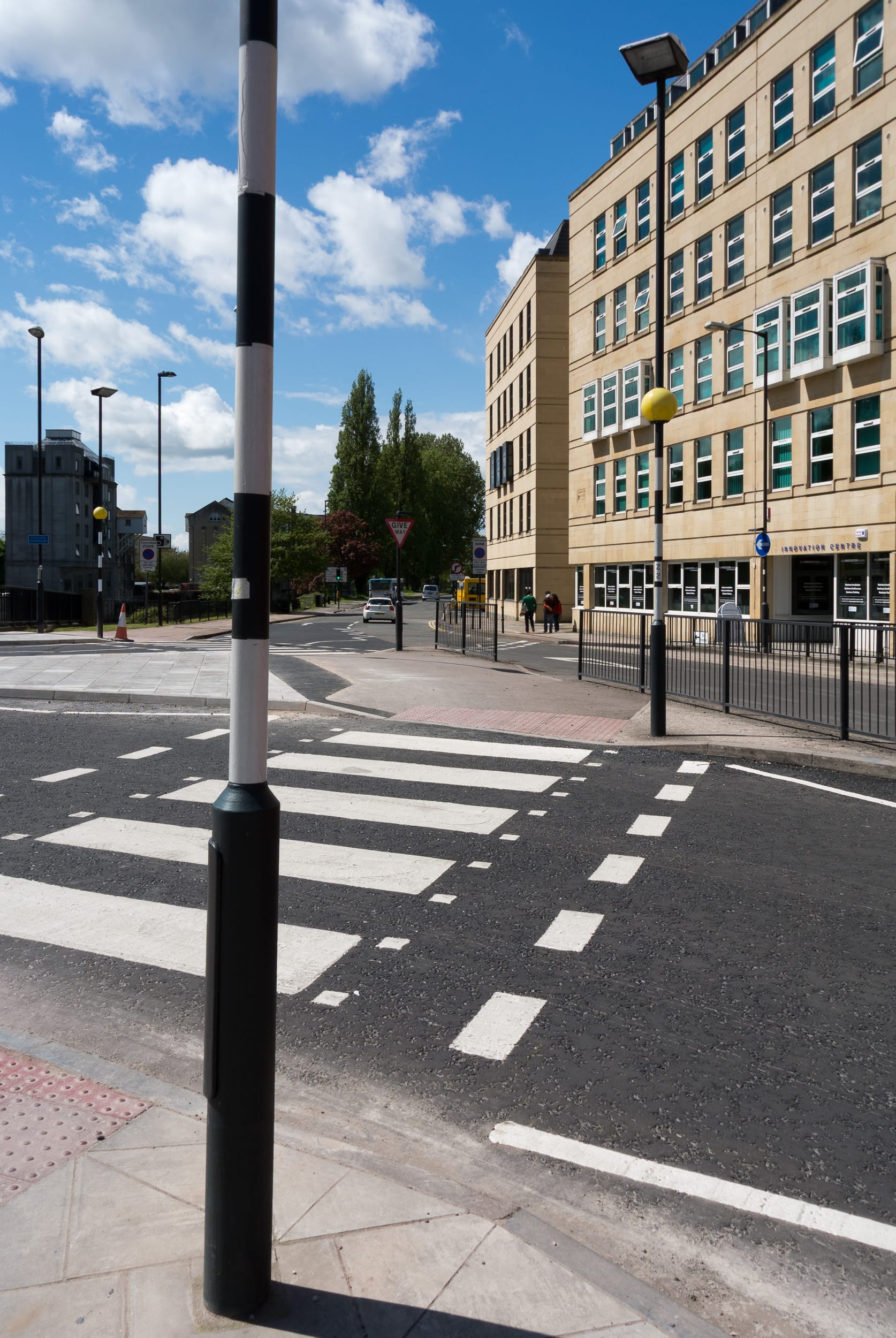


The Nikon 1 J1 delivers crisp, sharp images within the obvious limitation of its 10MP resolution, and while it only captures 12-bit RAW files rather than 14-bit, these have all the depth needed for deep, rich colours and extended dynamic range. Its speed makes it ideal for street photography and it's small enough to be an everyday carry for those shots which just 'appear'. The lack of IBIS and the rapid onset of noise a higher ISOs, though, mean it needs to be used with a bit more care indoors and in low light.
OK, so on the one hand we shouldn't expect too much from a 15-year-old 10MP sensor, but there are no nasty surprises and there are aspects of the Nikon 1 J1's performance which are surprising.
First, the resolution and overall image quality are fine. Apart from the 10MP resolution, the Nikon 1 J1 gives little way to a modern camera. It's not so good at higher ISOs, but things have moved on a lot since this camera was launched. The JPEGs are good, and while the RAW files are only 12-bit, they've still got plenty in reserve for editing.
Also, this is a camera that really does benefit from DxO PureRAW. I always recommend this software to anyone using an older camera. Its lab-developed lens corrections are just the best and its DeepPRIME processing crushes noise in older sensors and brings out details you never imagined were there. It is genuinely transformational.
If you look at the RAW files in Lightroom or Capture One (better), you'll think "Yeah, that's all right, what would you expect"? But if you run them through DxO PureRAW first you'll think "Oh, wow, that is a lot better, isn't it? That's rather good."
So now the autofocus. We forget what AF was like in 2011. Half-press the shutter release... wait... shoot. We put up with a lot in those days because we thought it was normal. But the Nikon 1 wasn't just good back then, it's good today. Shooting with the Nikon 1 J1 is like shooting with a modern camera – not quite instantaneous, but nearly.
Nikon 1 J1 verdict ★★★☆☆
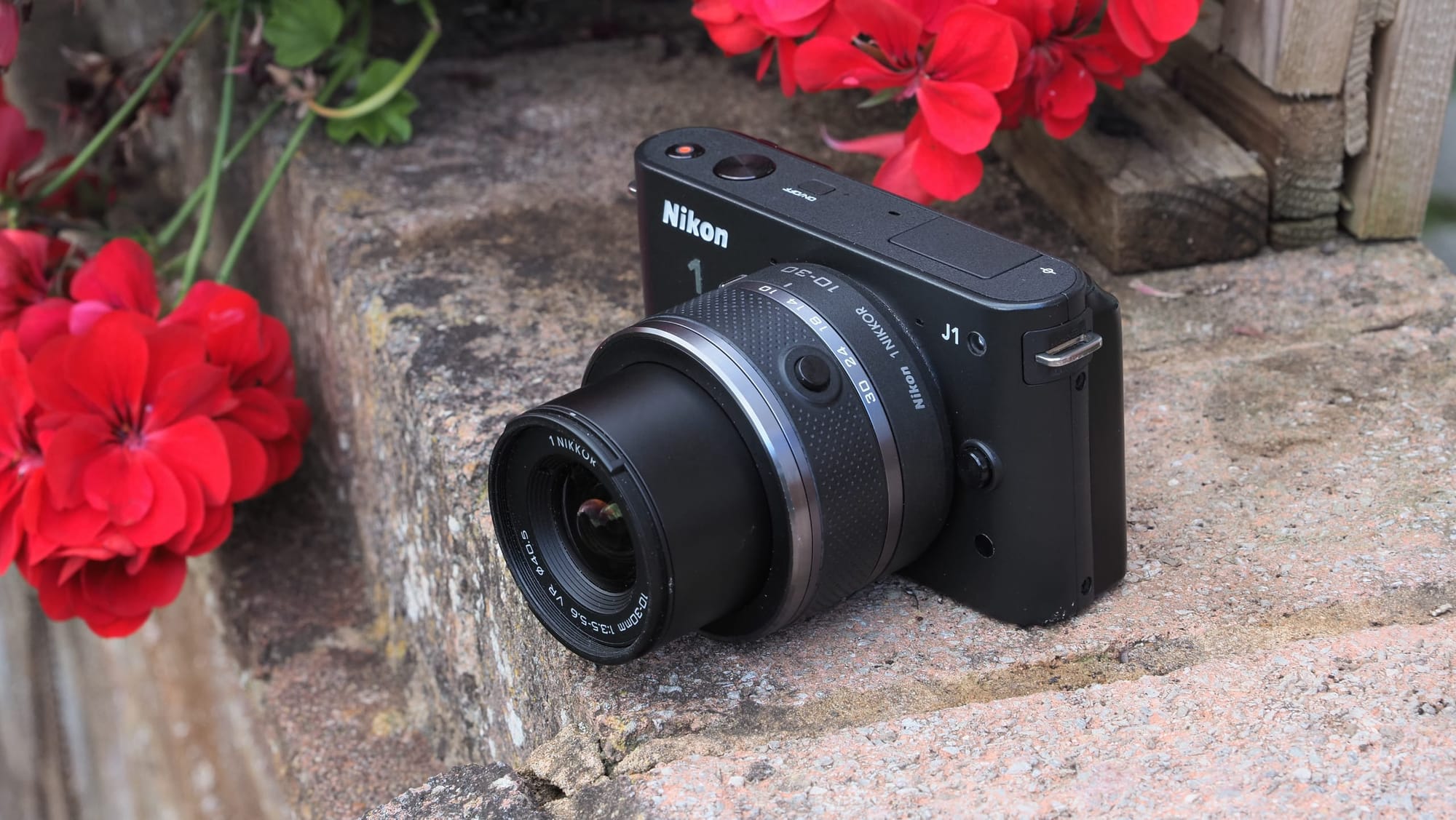
The limitations of the Nikon 1 J1 are obvious, notably the 10MP resolution, 1080 video and fixed rear screen. What's not so obvious is that this camera has a simplicity and elegance about its design that we just don't see any more, and a responsiveness that feels as sharp as the cameras we use today. It's fast, it's neat, it's cute.
Today you would probably choose the Fujifilm X-30 or an Olympus PEN with the 14-42 pancake zoom as a better used travel camera, but at today's prices the Nikon 1 is smaller and considerably cheaper than both.
What a pity Nikon bottled it with the design and produced a series of uglier and more mainstream versions in an attempt to compete with larger formats in a battle it could never win. Nikon should have carried on pioneering a new territory instead of turning back to fight over an old one. It didn't realise what it had in that first iteration.
Nikon released few lenses for the Nikon 1 series, and while you could get an adaptor to fit F mount DSLR lenses, these were hopelessly oversized on the Nikon 1 bodies and the 2.7x crop factor made them pretty useless anyway.
Both the Nikon 1 J1 and V1 were remarkable for the clarity and elegance of their design. But then that thing happens when you shift your trust from visionaries to accountants and marketers. The cold, dead hand of spreadsheets. That's what killed the Nikon 1 series.