The Fujifilm X30 has a genius design feature we never saw again
The X30 was in many respects quite an ordinary camera, even for its time. As a premium-quality compact camera it had a reasonable resolution of 12MP (not so reasonable today, perhaps) and a 4x zoom equivalent to a 28-112mm f/2.0-2.8. What set it apart, though, was not its specs but its design.

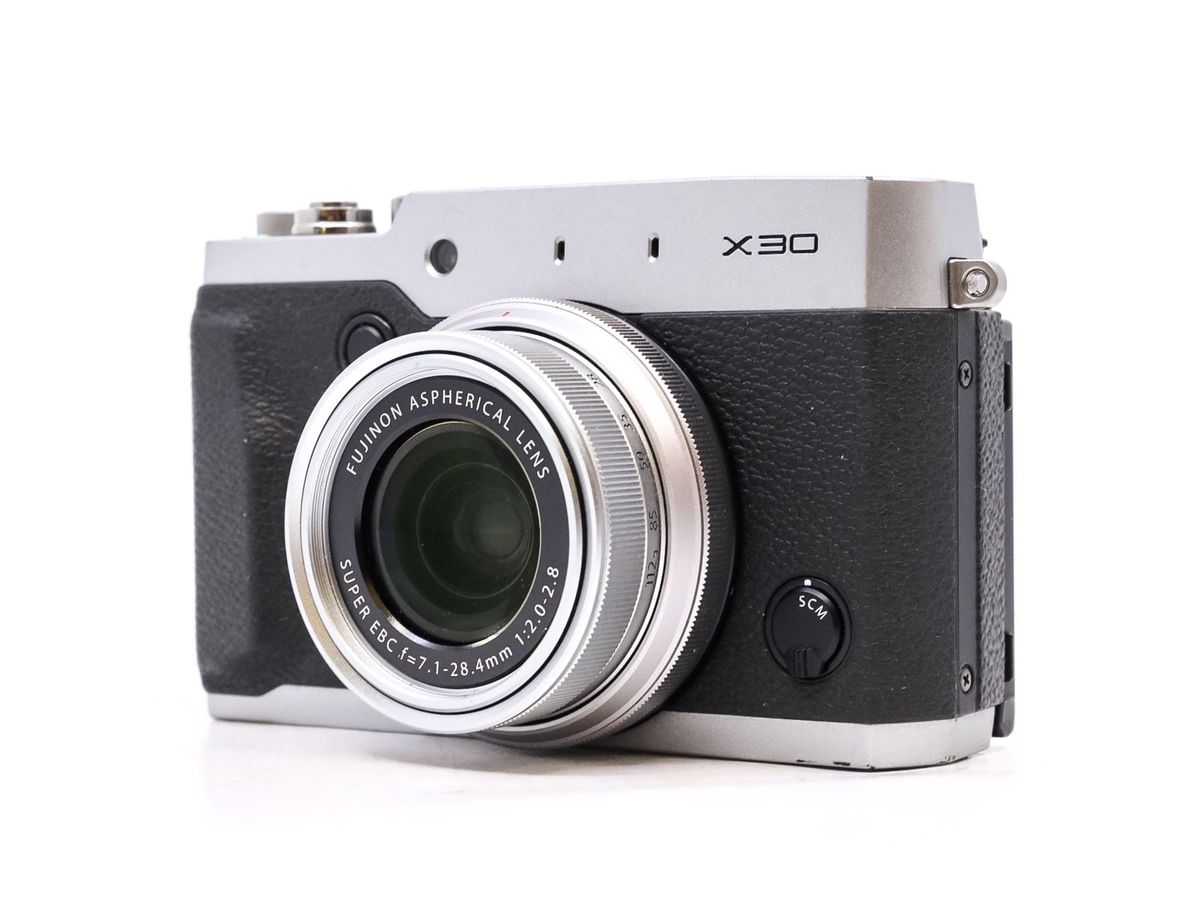
The X30 was in many respects quite an ordinary camera, even for its time. As a premium-quality compact camera it had a reasonable resolution of 12MP (not so reasonable today, perhaps) and a 4x zoom equivalent to a 28-112mm f/2.0-2.8. What set it apart, though, was not its specs but its design.
Almost all compact cameras follow the same operational convention. You press and hold a power button until the camera starts up, and then zoom in and out using a motorized zoom control. It works fine. It feels a bit disconnected and sluggish, with little of the physical feel of larger cameras, but it goes with the territory, right?
But then Fujifilm designed the X10, following up with the X20 and X30 which operated on the same principle. These operated on a completely different, physical principle.
There’s no power switch. To turn the camera on, you turn the zoom ring past a detent to extend the lens for shooting and power up the camera at the same time. Nice. Even nicer is that the zoom action is mechanical, not electronic. It works just like a ‘grown up’ zoom lens on a mirrorless camera or DSLR. There’s even a marked zoom ring to show you what focal length you’re at.
This shows the difference between camera specifications and camera design. The X30’s specifications were pretty ordinary at the time and are definitely dated today – yet its physical design is, I think, unmatched in a compact digital camera.
Perhaps this is the reason why so many older digital cameras are experience such a surge in interest. It’s not just about the technical specifications, but the whole handling experience.
There’s another reason why older cameras remain popular. I think it’s because many people want them for stills photography not video (other devices are better for video), and because most of us now share images which will only ever be seen on digital displays, and that even a 10-12 megapixel camera still captures at a high enough resolution for what we need.
The fact is, I don’t like the idea of old cameras going to waste when they still have value. I also don’t like the idea of great design going to waste at the same time.