Nikon Df review in 2026 ★★★★☆
You have to go all the way back to 2013 for the launch of the Nikon Df. Was it just a doomed experiment, or has its time come at last?

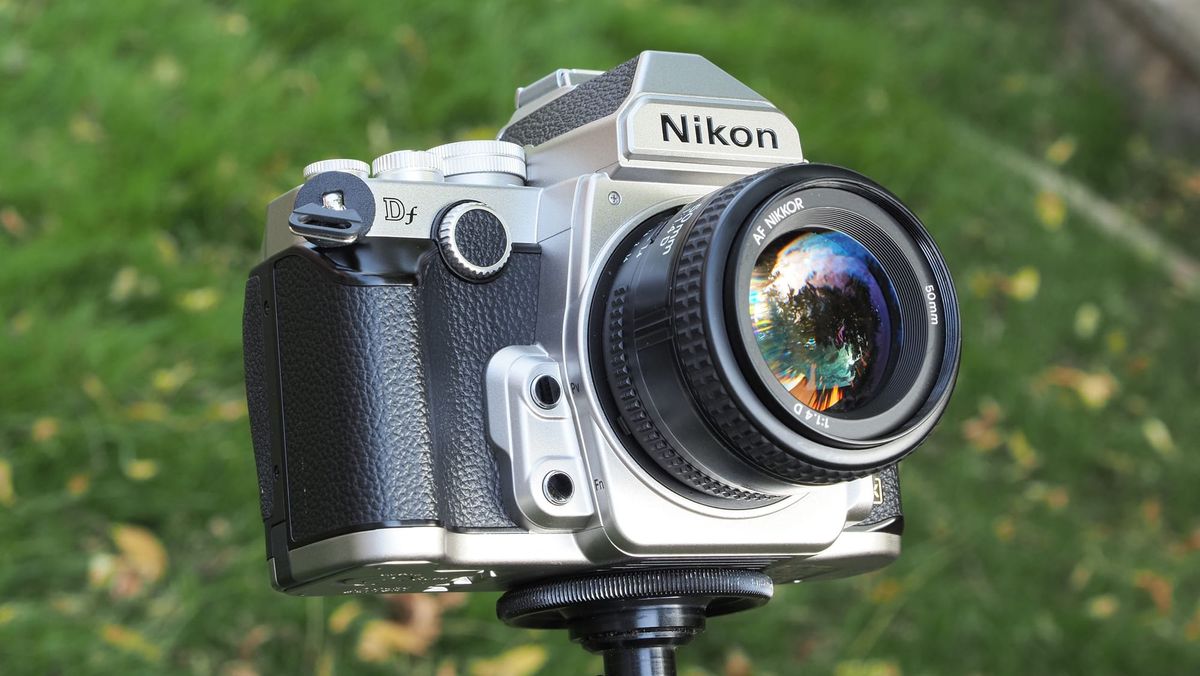
The Nikon Df is a full frame DSLR launched in 2013. Its design was a radical departure for Nikon, and quite unlike its regular modern DSLR designs. By contrast, the Nikon Df was designed to evoke the look and feel of Nikon’s classic FE and FM 35mm film SLRs. The Df was sold in silver and black versions, but it was the silver version with black leatherette trim that really captured that vintage style.
Nikon did more than change the look of this camera. It added physical shutter speed and ISO dials to the top plate. It also built in compatibility with past generations of Nikon F lenses, including the relatively recent ‘D’ lenses, the last to feature aperture rings on the lenses themselves.
Some of Nikon’s decisions did raise a few eyebrows. For the Df it chose the 16MP sensor from its flagship sports and action camera of the time, the Nikon D4, when the Df was clearly not that kind of camera. Many thought it should have had one of Nikon’s mainstream 24MP full frame sensors, perhaps even the 36MP sensor from the D800/D810.
The controls were also a bit of an awkward hybrid. The Df worked like a modern DSLR via a (tiny) mode dial, controlling the lens aperture from the body. Or you could use an older lens with an aperture ring but only in manual and aperture priority modes.
The Nikon Df was also an expensive camera at the time, an odd combination of luxury and limitations, beautiful looks and baffling operation. So 13 years later, in 2026, shouldn’t this offbeat experiment be completely obsolete and irrelevant? Oddly, no. Quite the opposite.
Nikon Df specifications
- Lens mount: Nikon F (FX)
- Sensor: Full frame
- Resolution: 16.2MP
- ISO range: 100-12,800,200 (exp. ISO 50-204,800)
- Autofocus: 39-point phase detect with 9 cross-type/contrast AF in live view
- Video: No
- Continuous shooting: 5.5fps
- Shutter: Mechanical, 30sec-1/4,000sec, 1/250sec x-sync
- Viewfinder: Optical pentaprism, 100% coverage, 0.7x magnification with 50mm lens
- Rear screen: Fixed 3.2-inch, 921k dot
- Storage: 1x SD/SDHC/SDXC
- Battery: EN-EL13, 1,4000 shots
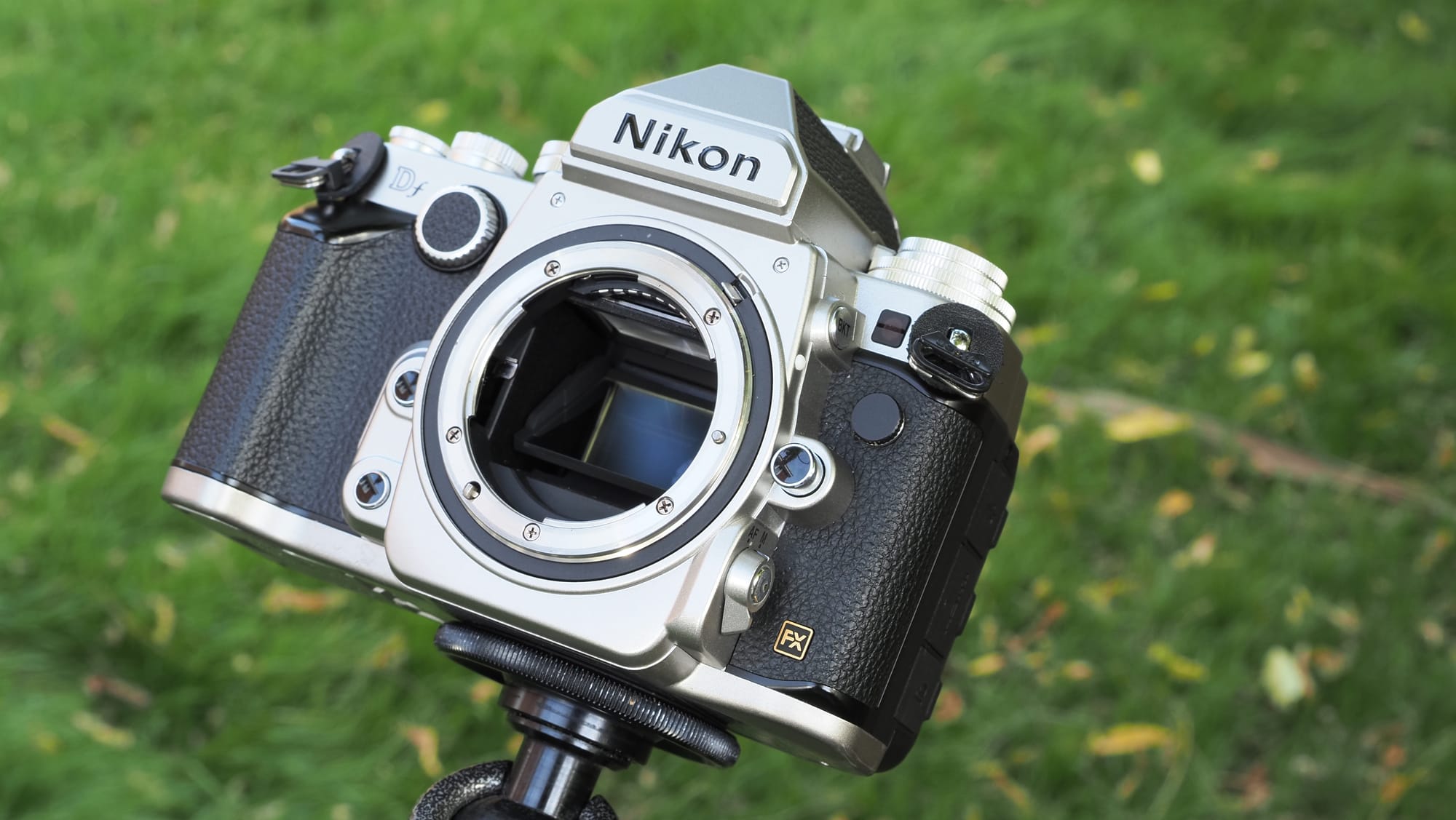
Things to note here are the 51-point AF system, for a long time the best that Nikon made, the 1/8000sec maximum shutter speed, the high-quality optical viewfinder, the slightly larger than usual 3.2-inch rear screen, which also tilts, and the 950-shot battery life.
What you don't get is phase detect AF in live view, which is always going to be a problem for video. The Nikon Df gets around this very neatly – it doesn't shoot video! This is the perfect camera for stills photographers who object to video features even existing on their cameras. Also, while the maximum ISO looks stratospheric, I personally wouldn't go beyond the maximum ISO 51,200 in standard non-expanded mode, and I'd probably try not to go higher than ISO 12,800.
Nikon Df lens compatibility
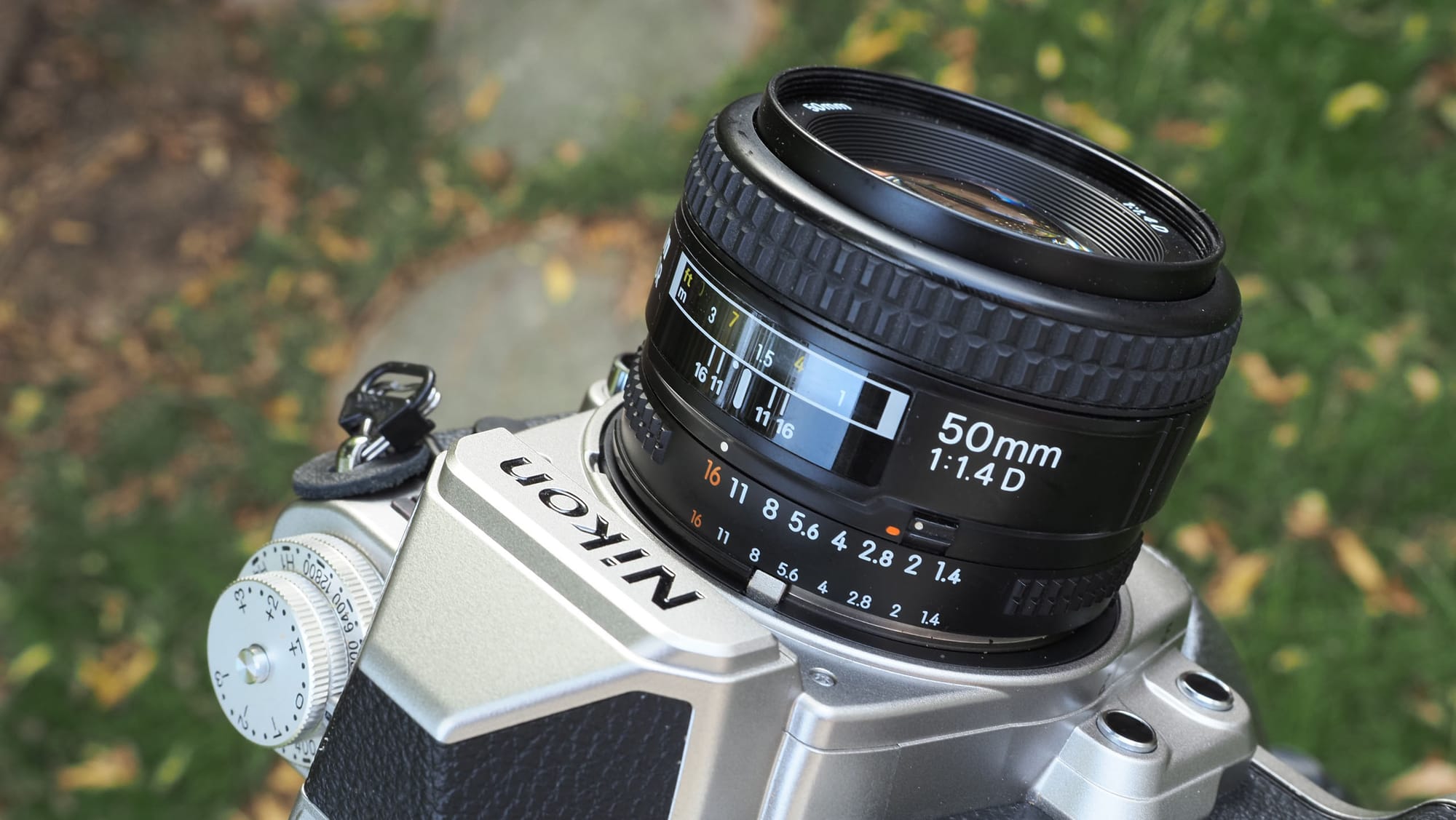
The Nikon Df’s party trick is its compatibility with Nikon F lenses going right back to 1959. It was typically sold with a modern Nikon AF-S 50mm f/1.8G in a specially re-styled edition to match the vintage looks of the Df, but the Df can also be used with AF-I lenses, AF and AF-D lenses, manual focus AI and AI-S lenses and non-AI lenses going back to 1959.
Older AF lenses don’t have internal AF actuators. Instead, they’re driven by a mechanical screw-drive AF motor in the camera body. The metering works as normal.
If you go back even further to manual focus AI and AI-S lenses you need to lower the camera’s meter coupling lever to engage with the lens, and with the oldest non-AI lenses you must raise the camera’s meter coupling lever out of the way before mounting the lens – this is essential to avoid damage.
So although the Nikon Df can be used like a modern DSLR, with full compatibility with Nikon’s latest AF-S G-type lenses, it’s purpose made to accept vintage Nikon lenses. My lenses don’t go back that far, but I do use my Df with D-type lenses, the generation before Nikon’s G-type generation. They’re cheap to buy, they offer full autofocus (albeit via the camera body, so a little slower and noisier), full exposure compatibility and physical aperture rings for direct aperture control. Most have distance scales too – remember those?
Or you could use the Df with any modern G-type zoom if you don’t like primes. The AF-S 24-120mm f/4 VR might be a little big, but the AF-S 24-85mm f/3.5-5.6 VR could be a good match.
Nikon Df handling and controls
The Nikon Df is a little bulkier than the average full frame mirrorless camera, but is not especially heavy and offers quite a decent grip, even though it might not look like it will. The controls, however, are quite odd compared to most other cameras.
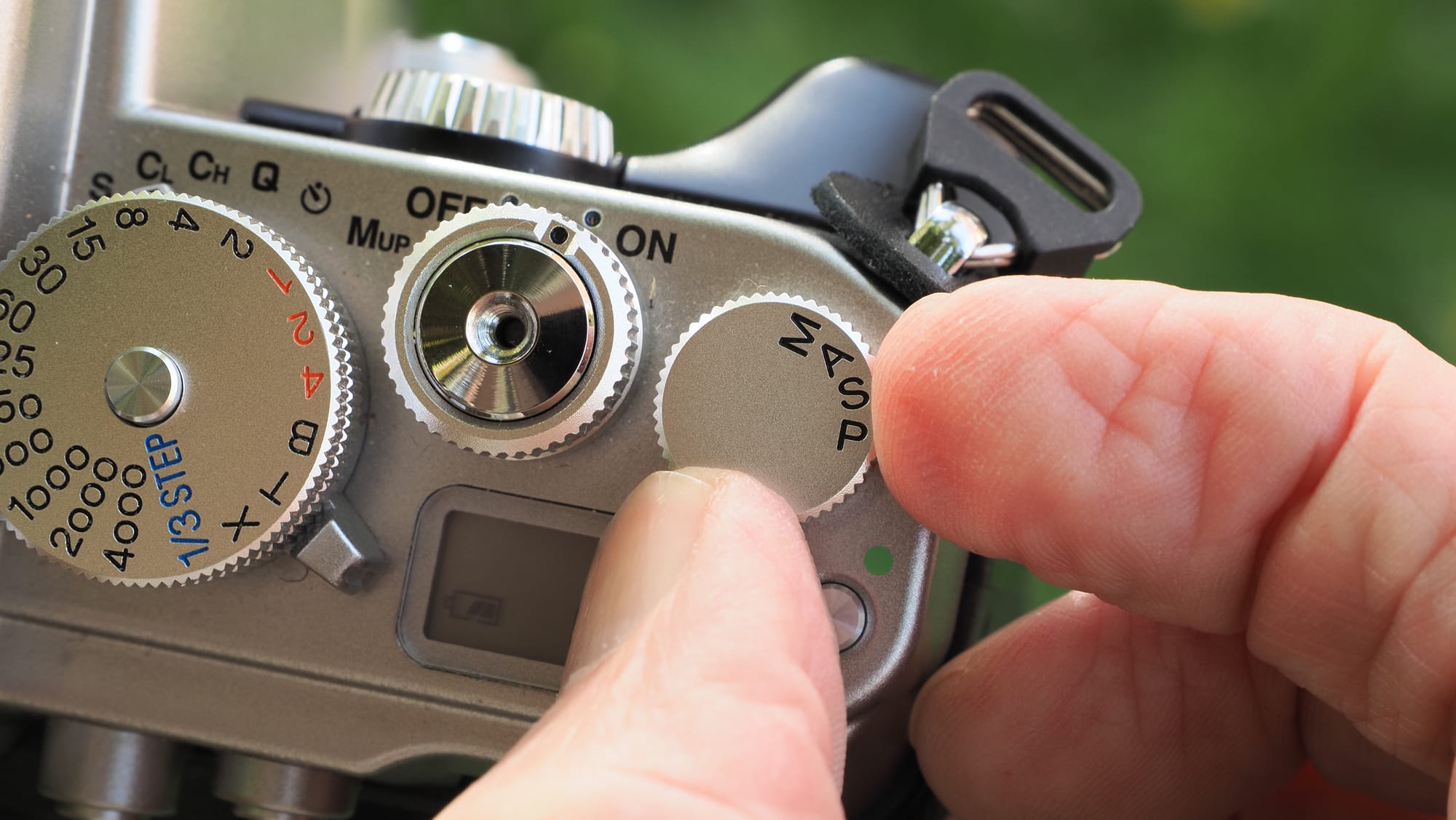
First, there is a mode dial, but it’s very small and you have to lift and turn it to change modes. If you are going to shoot in manual mode or aperture priority using lenses with their own aperture rings, the mode has to be set to M or A. If you switch to S or P mode you’ll get an error on the tiny LCD display on the top panel. This is because the camera body needs to control the lens aperture in these modes. With my D-type lenses, this means turning the aperture ring to its minimum setting, which transfers aperture control to the camera.
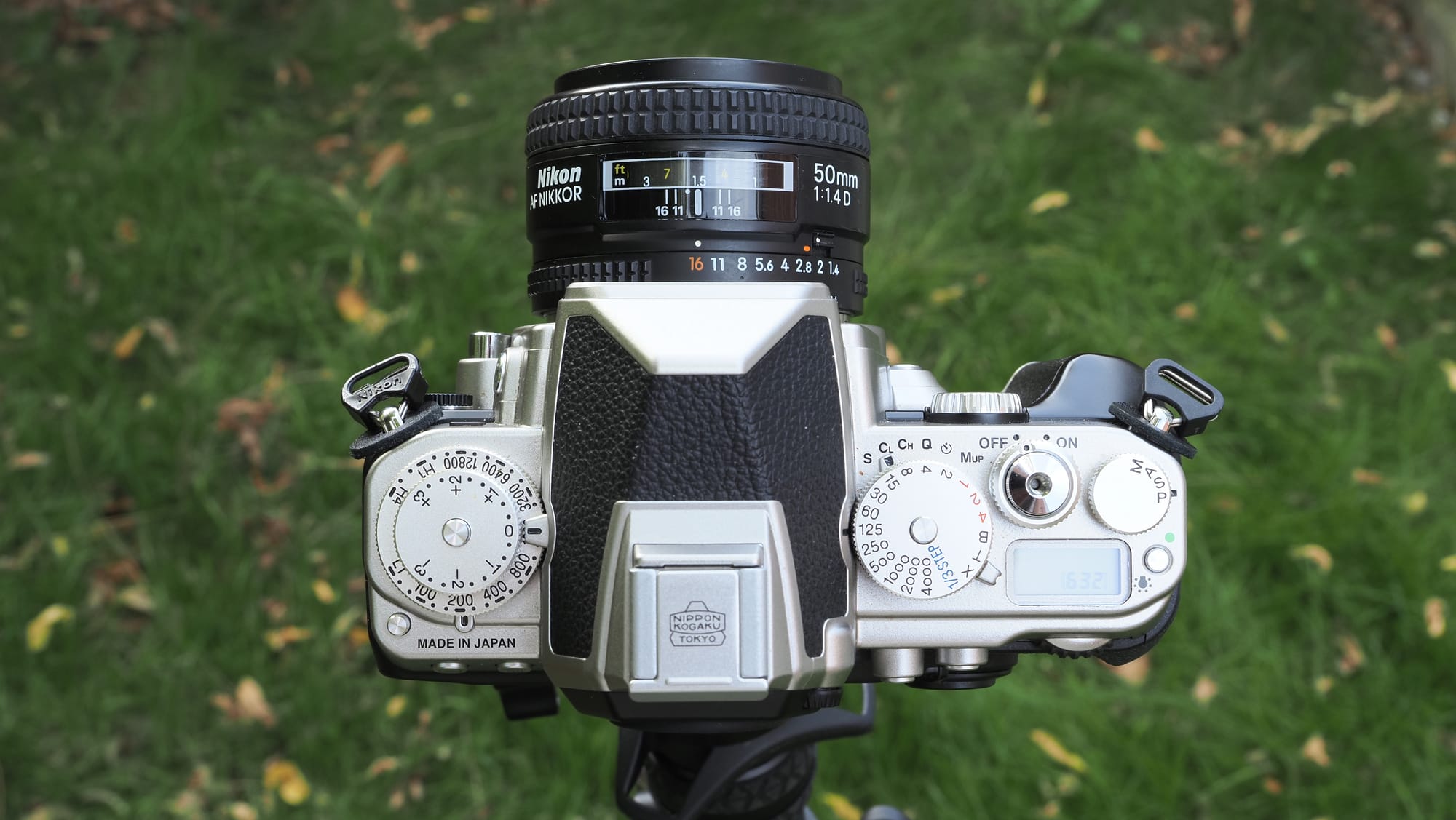
There’s a big shutter speed dial on the top and stacked EV compensation and ISO dials on the left of the pentaprism. The shutter speed dial is ignored if you’re in A or P mode, likewise the ISO dial if you have auto ISO set in the menus. There is quite a lot to remember with this camera. It’s not like the intuitive and foolproof exposure controls on a Fujifilm X-series camera, say.
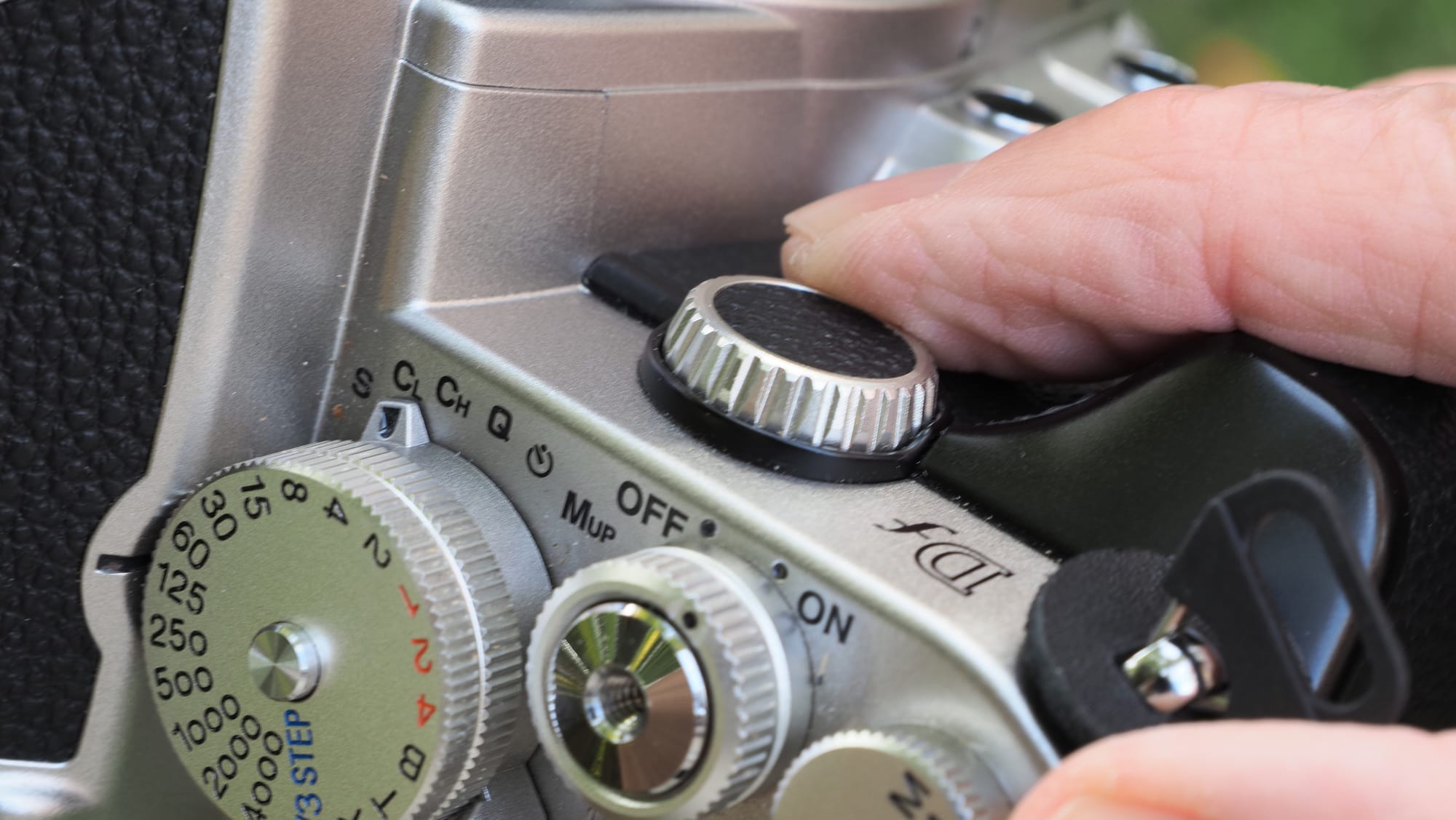
The Df has two controls dials. The rear dial is set into the back of the camera in a normal position, but the front dial is mounted vertically on the front of the camera. It looks wonderful but it’s not so easy to use.
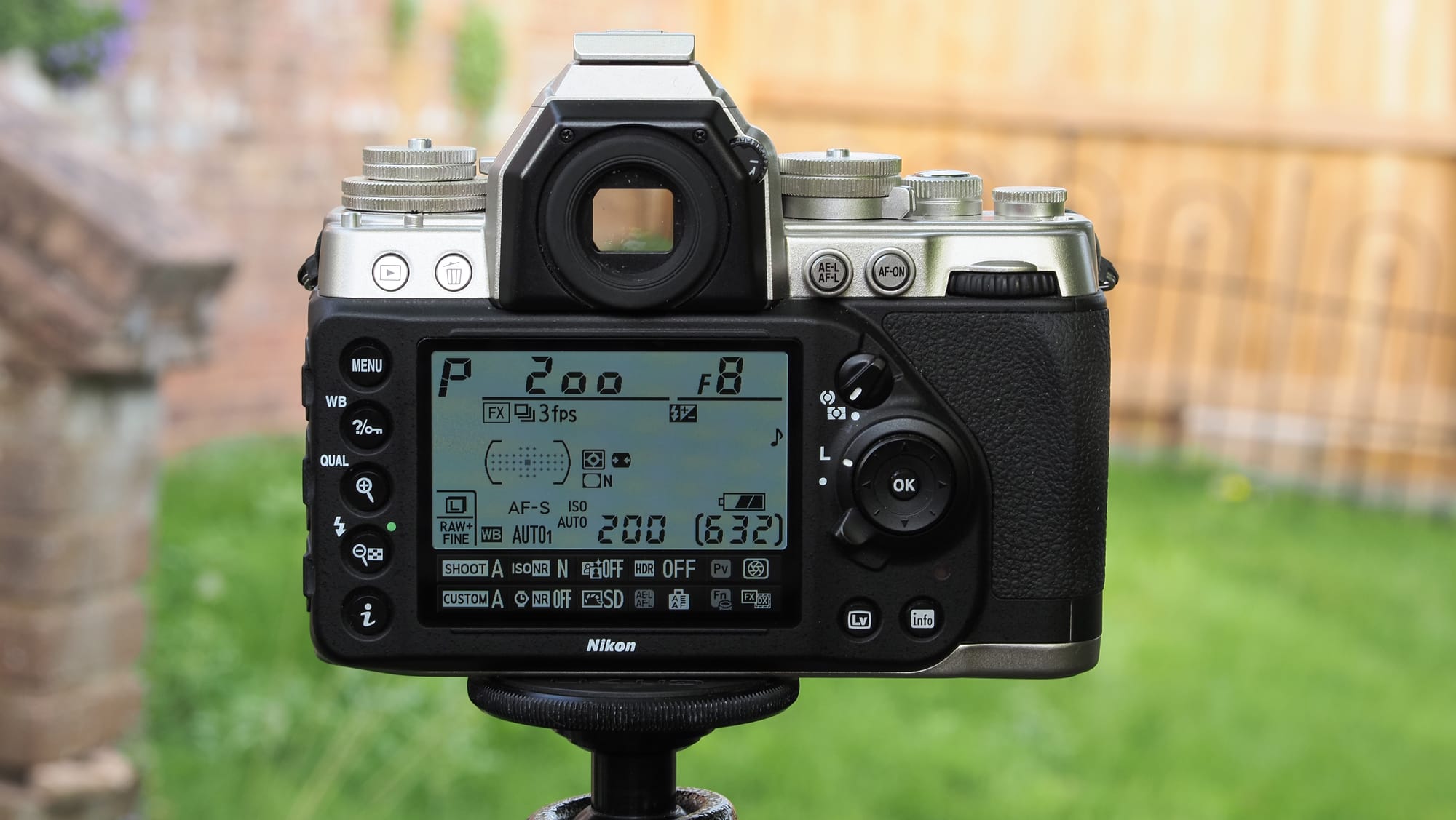
The rear screen is bright, sharp and clear and looks like any modern LCD, despite this camera’s age. It doesn’t tilt or swivel, but that doesn’t feel like any great hardship. Annoyingly, though, the single SD card slot is in the base next to the battery.
Nikon Df performance
The first thing to say is that the Nikon Df’s viewfinder is just beautiful. Not everyone is a fan of optical ‘finders. Mirrorless fans prefer the WYSIWYG style of an EVF. But for OVF fans, the Df’s viewfinder is one of the best. It’s big, bright and clear and a joy to use.
The 39-point AF system is one tier down from Nikon’s best at the time, and its AF points are all clustered towards the center of the frame. But this is a camera for deliberate use not high-speed continuous bursts and subject tracking, so it doesn’t really seem to matter very much. It’s quick and effective, that’s the main thing. It’s slower and noisier if you’re using older lenses without their own AF motors, but it’s not as bad as you might think and still perfectly usable.
There is a live view mode, which might surprise some in a camera of this age, but not surprisingly it’s pretty slow and clunky to use. You’re better off using the AF-ON button for focusing just once instead of repeatedly for every shot.

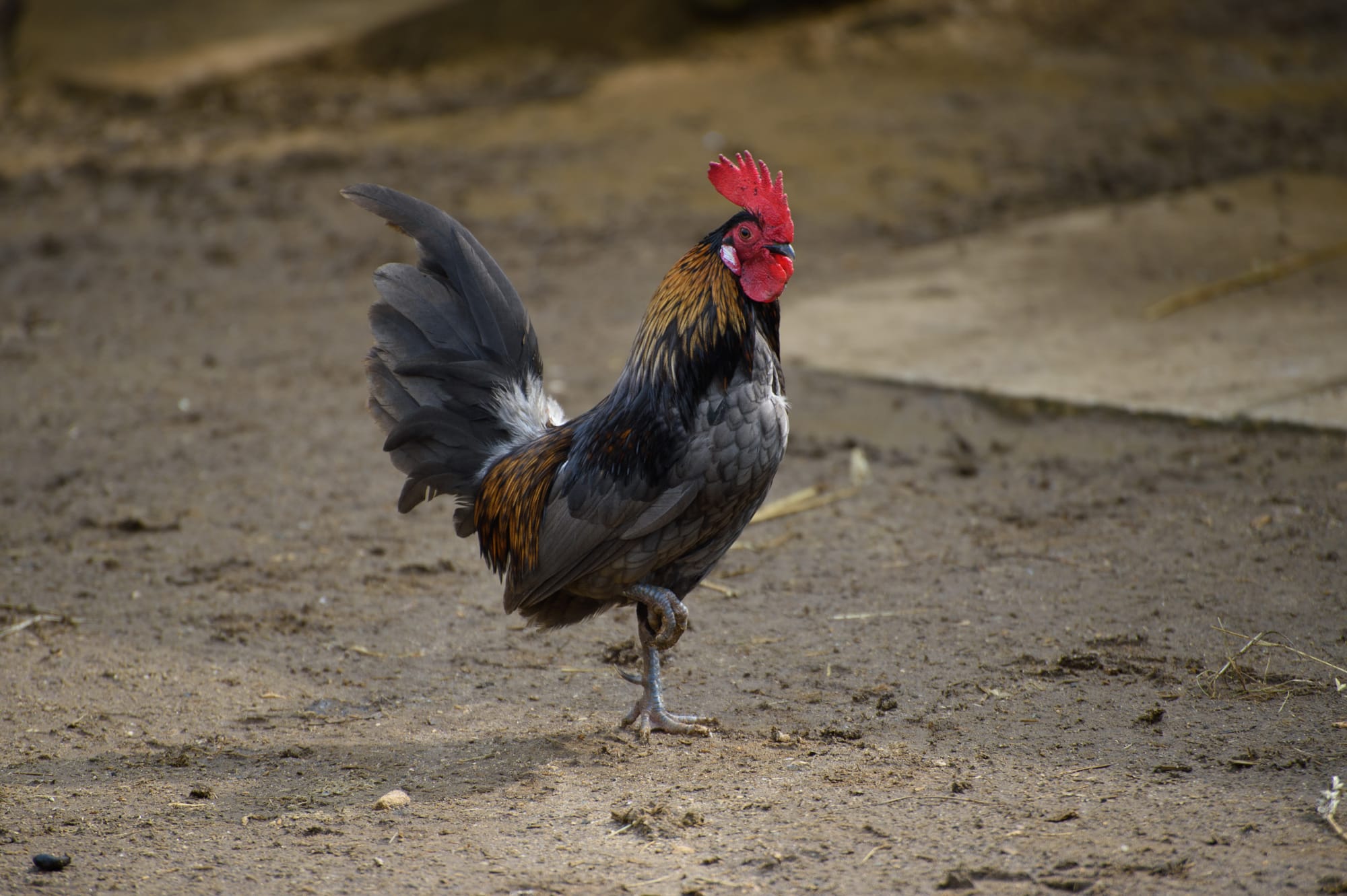

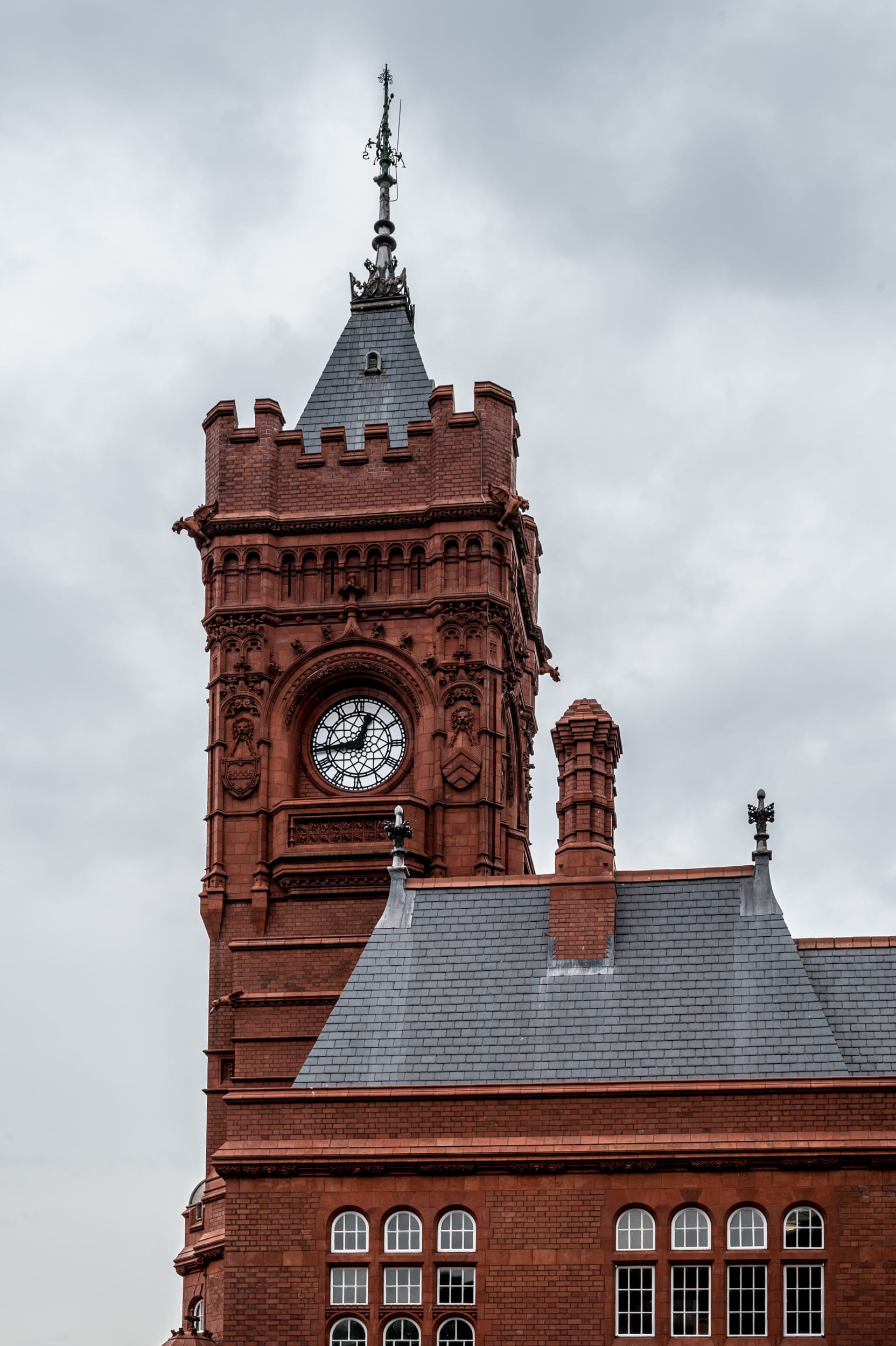
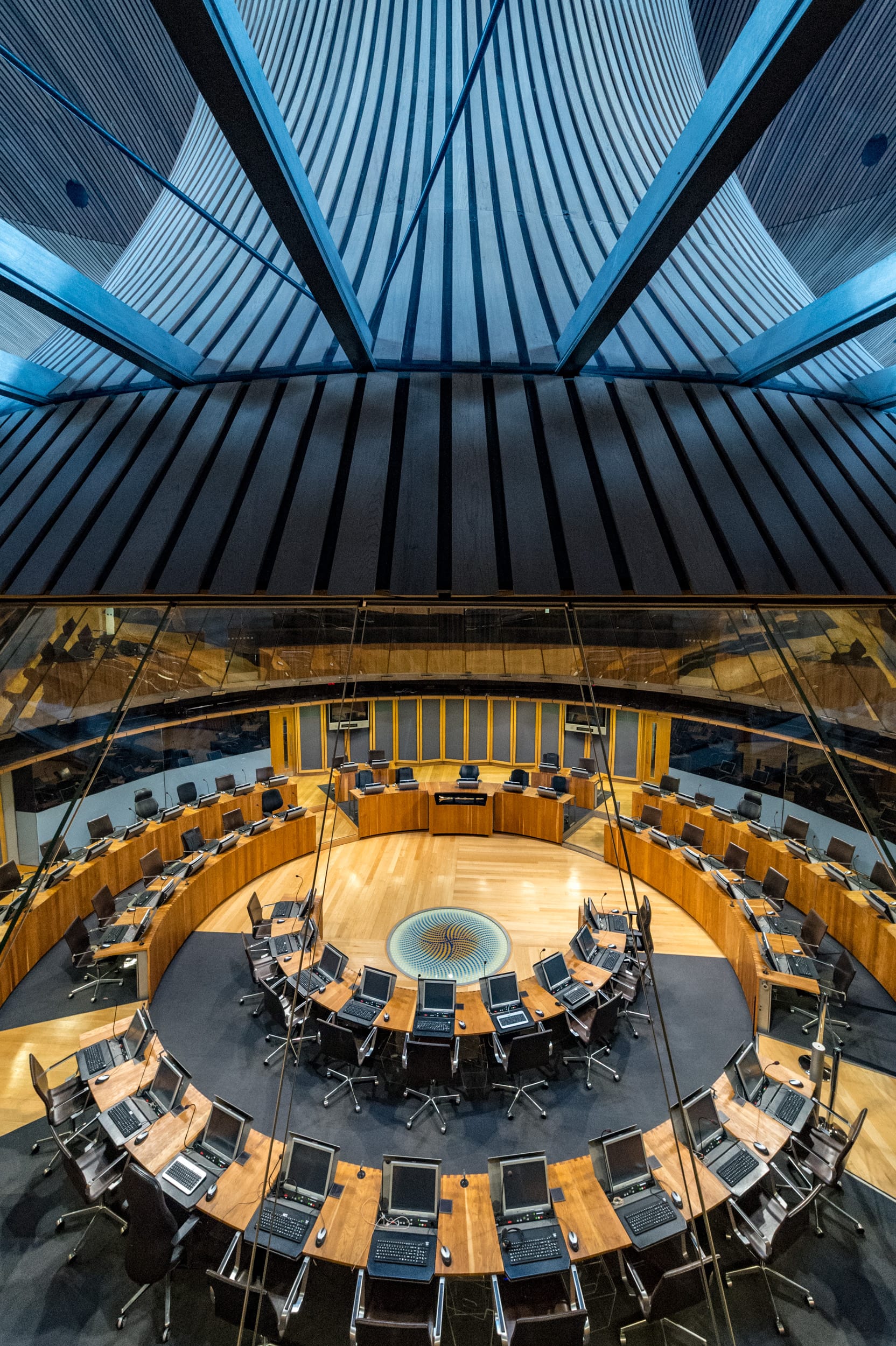
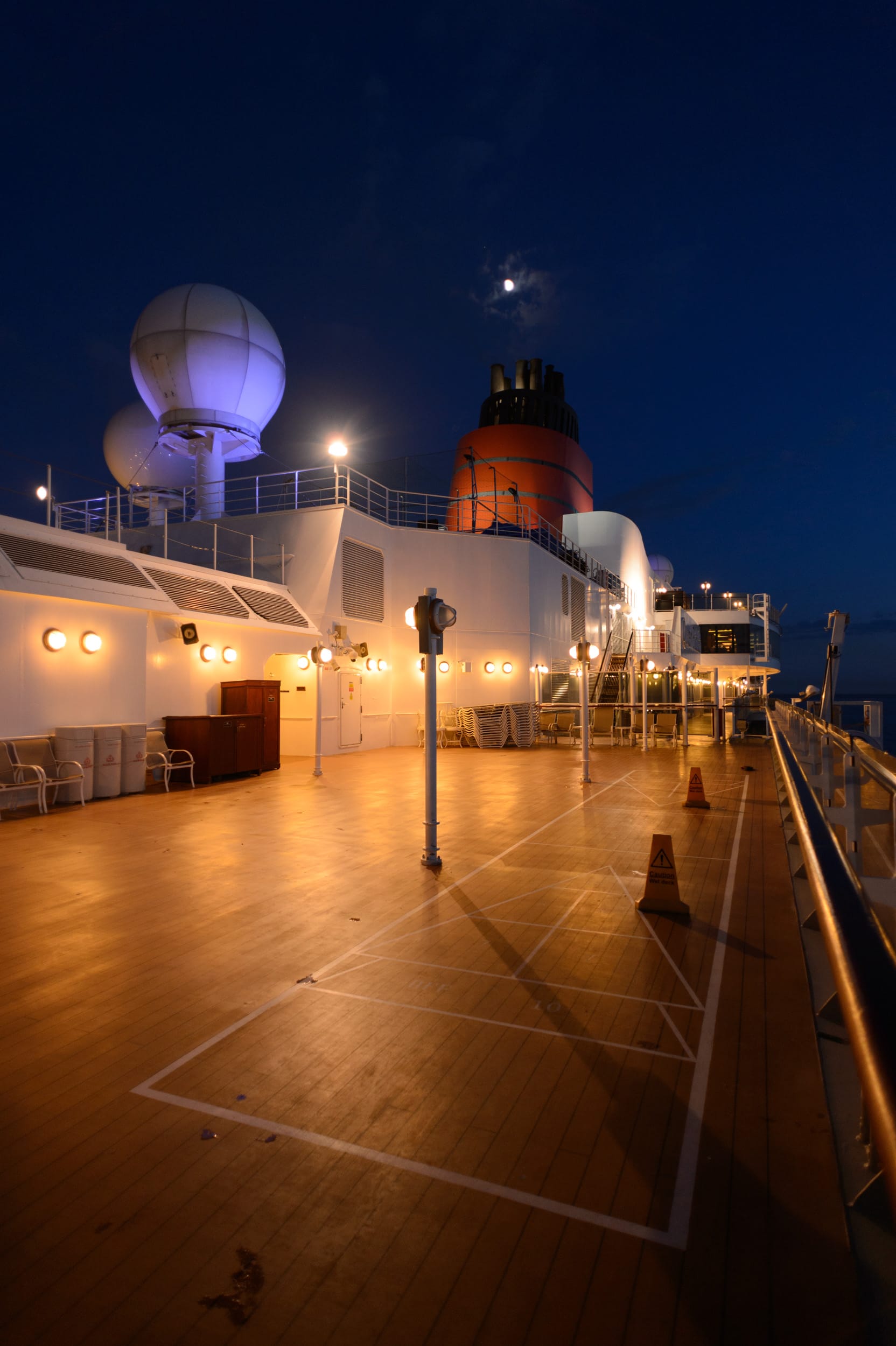



The image quality is excellent. Yes, it’s only 16MP, but if you can get past that you’ll be rewarded with rich, saturated images with an organic feel which became something of a trademark for Nikon DSLRs of that period. The high ISO image quality is good too, not least because of the limited resolution and the fact this sensor came from the flagship Nikon D4. The RAW files are extremely malleable, and not just for shadow recovery since they offer better than usual highlight recovery too.
There’s nothing in the Df’s images to make them look old. With modern lenses you’ll get thoroughly modern-looking digital images. If you use older or vintage lenses, though, you can get some very characterful looks wide-open that you don’t really see with today’s glassware.
Nikon Df verdict
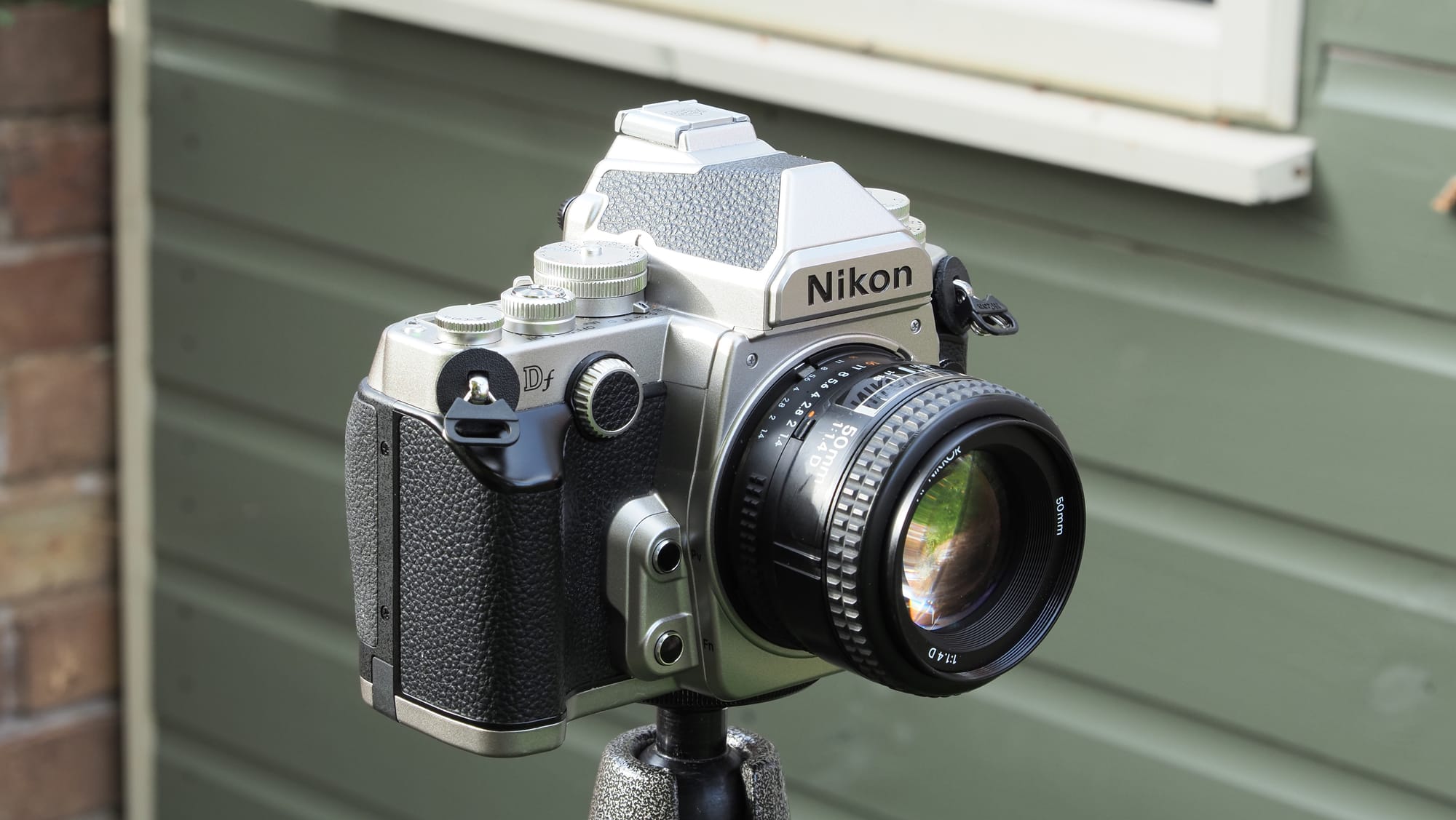
We live in a world where the rapid pace of mirrorless camera development has left even last year’s cameras looking obsolete, never mind those developed over a decade ago. Yet at the same time there has been a kind of counter-revolution amongst a large chunk of a photographic audience exhausted by the cost and alienation of constant technological advance, and a growing realisation that older cameras actually still work fine. While technology moves forward, many are starting to feel that physical design has gone backwards, and we’ve lost the physical heft, the optical viewfinders and the feel in the hand that DSLRs used to give us.
The Nikon Df looked like an expensive indulgence in 2013, at a time when we were eager to ditch mechanical controls for digital interfaces and megapixels. Now it’s a lot cheaper, and there are plenty of excellent low-use examples on the used market. And now that DSLRs and physical exposure controls are gone, we miss them. Maybe – impossibly – the Nikon Df’s time has actually come.
For everyday one-shot-at-a-time photography, the Nikon Df is hardly any slower to use than a modern camera. Only the 16MP resolution dates it. Otherwise, this feels like a camera that could have been designed yesterday for a modern retro audience, even though it came out way back in 2013.
The Df has considerable appeal even with modern G-type lenses but its external exposure controls really come into their own with D-type lenses and older which have physical aperture rings. This is where you get the full ‘Df experience’, though this blend of old and new controls does make it somewhat quirky to use. Nevertheless, for old-school camera ‘feels’ with modern results, the Nikon Df really delivers. Not just back in 2013 when it was launched, but today, in 2026.
Does the Nikon Df need DxO PureRAW?
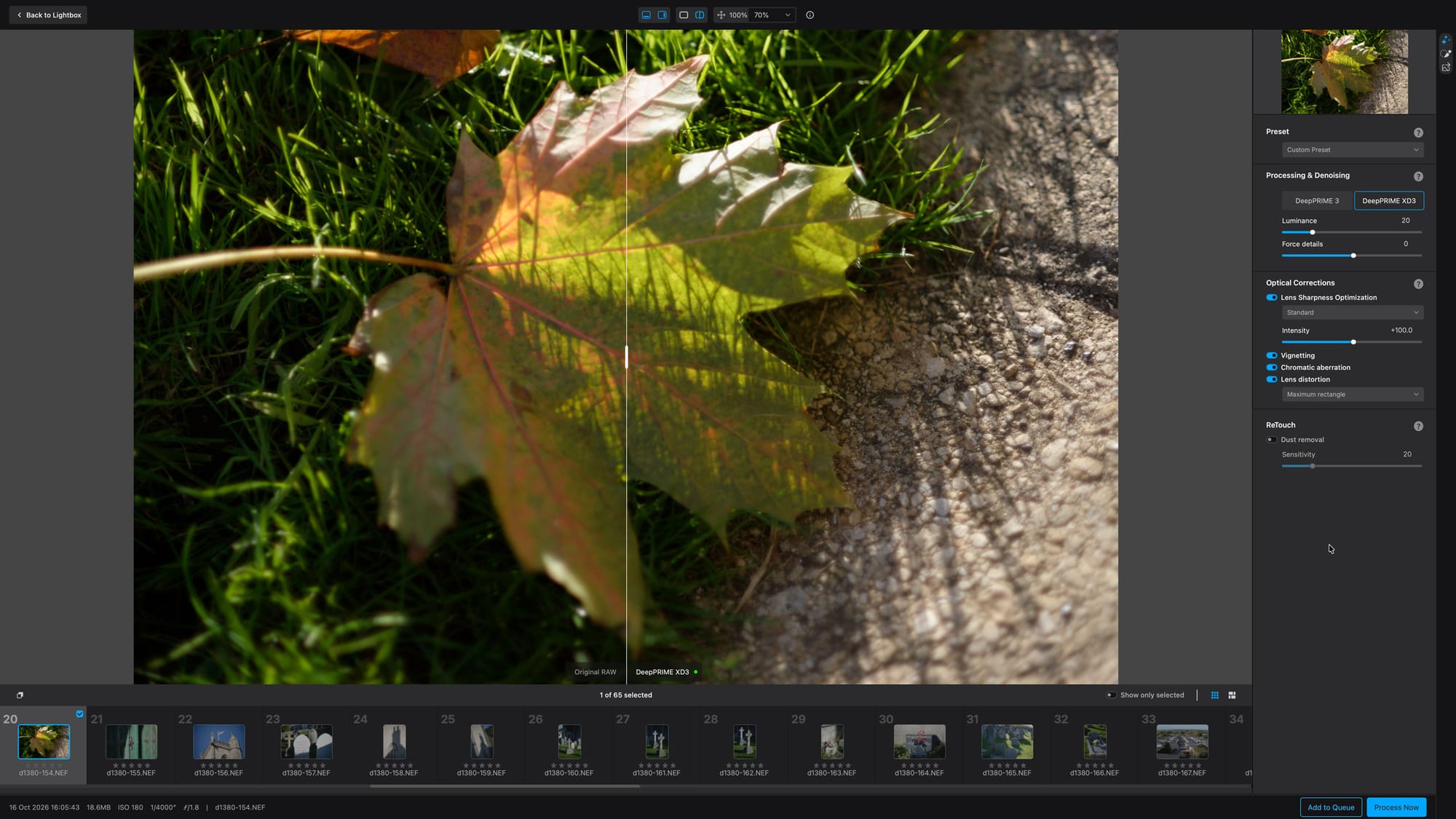
I always run the RAW files from older cameras and lenses through DxO PureRAW to see what difference it makes. Older sensors tend to get noisy quickly at higher ISO settings, and the processing of the day did not necessarily reveal all the detail the sensor could capture. Older lenses, too, suffer from more vignetting and edge softness as a rule, which DxO’s lens profiles can correct very effectively.
I’ve used many older cameras which are showing their age but have been brought back to life by DxO PureRAW – or brought back to modern-day relevance and image quality expectations, at least. Notable examples include my Canon EOS 50D – a real lame duck without DxO PureRAW – and my Fujifilm X30, one of the best compact cameras ever made but hamstrung by its small sensor and indifferent RAW processing in Lightroom.
You can launch PureRAW from within Lightroom, but I prefer to batch-process my RAW files before importing them. PureRAW 6 can output compressed DNG files that behave just like regular RAW files in Lightroom but are actually smaller than the original files. PureRAW 6 can even take out dust spots on your sensor as part of the process.
But back to the Nikon Df – and while the results from many older cameras are genuinely transformed by DxO PureRAW, I have to say that the Nikon Df, and the D-type lenses I’ve been using, don’t really need it. Any gains in image quality are hard to spot at low-medium ISO settings, though you might need DxO’s special noise reduction at higher ISO settings – and those on the Df do go pretty high. Lightroom tends to do a pretty good job with full frame sensors and has profiles for lots of older lenses, not just modern ones, so the Df’s RAW files look good without needing any help from PureRAW. There, I’ve saved you some money.