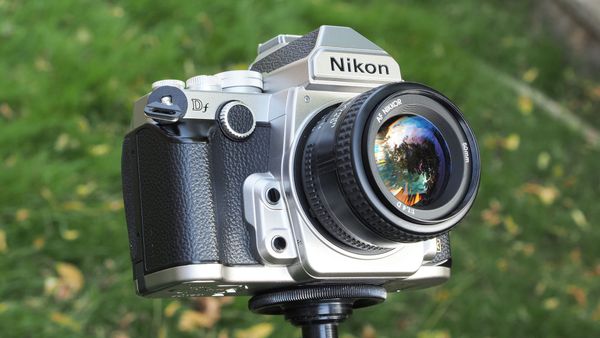
Nikon Df review in 2026 ★★★★☆
You have to go all the way back to 2013 for the launch of the Nikon Df. Was it just a doomed experiment, or has its time come at last?

You have to go all the way back to 2013 for the launch of the Nikon Df. Was it just a doomed experiment, or has its time come at last?

Put simply, analysis paralysis is the fear of making a decision – any decision – when there's a risk you may be missing a better one. That seems to sum up the infinite complexity and potential of modern cameras perfectly.
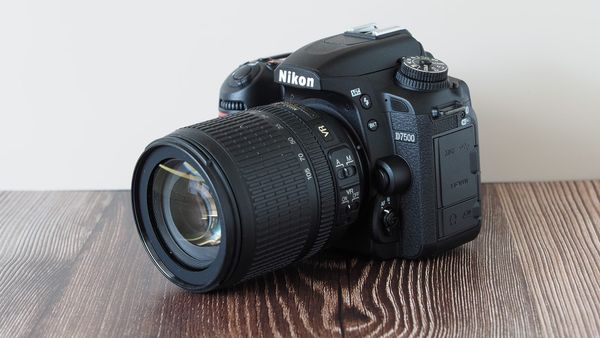
Launched in 2017, the Nikon D7500 can still be found new here and there, but it's now mostly seen as used camera. But does it still have what it takes in today's world?

This is a big worry for anyone using or looking at older digital cameras. However, megapixels may not be the issue you think it is
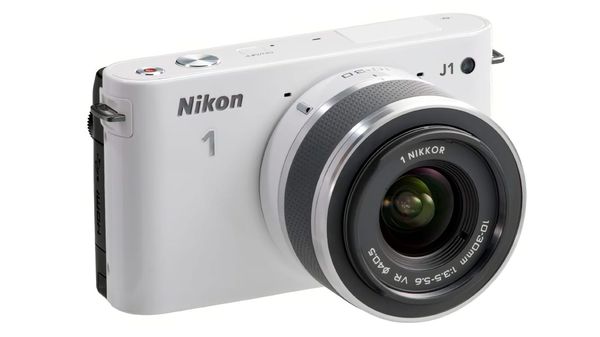
This is a compact mirrorless camera with a 1-inch sensor, hybrid phase/contrast AF, a fully electronic shutter and the ability to shoot at 60fps... in 2011!
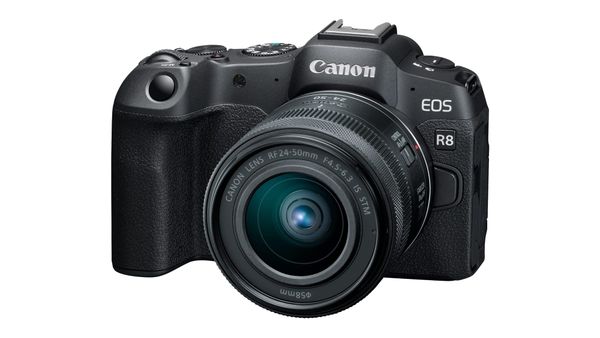
I liked the Canon EOS R8 a lot while I owned it, and I was especially impressed by its thoroughly modern Dual Pixel CMOS AF and subject recognition, high-speed burst shooting and full-width 4K 60 video. Now Canon has replaced it with a new version that's better... kind of.

These cameras are at the opposite end of Fujifilm’s X-T evolutionary journey. The X-T1 was the first attempt, with a 16MP sensor and no IBIS, while the X-T5 is a 40MP powerhouse with hybrid phase-detect AF, IBIS and 4K video. How could they be more different?

I used to own a Nikon D7200 when I was Technique Editor on N-Photo magazine because I was working exclusively with Nikon DSLRs. I sold it when I moved to Digital Camera World to cover mirrorless cameras. I’ve always missed my D7200 but I’ve ended up replacing it with a D7500. So how do they compare?

I like the old Canon EOS 50D. This is a big, meaty camera with a solid build and nice controls. I love what’s on the outside. Unfortunately, I don’t love what’s on the inside. It has a 15MP Canon sensor that’s pretty poor by modern standards. This is where DxO PureRAW comes in.

The X30 was in many respects quite an ordinary camera, even for its time. As a premium-quality compact camera it had a reasonable resolution of 12MP (not so reasonable today, perhaps) and a 4x zoom equivalent to a 28-112mm f/2.0-2.8. What set it apart, though, was not its specs but its design.

If you like composing images on a screen rather than in a viewfinder, then there’s no doubt that mirrorless cameras do it better than DSLRs. With DSLRs you have to switch to a live view mode with a sensor-based AF system which is so much slower that many users just won’t bother.

It’s annoying. The mirrorless revolution was supposed to usher in a new age of lens design, but a lot of the time it seems like we’re getting less choice not more. That seems especially true if you compare Canon’s old EF-S DSLR lens line-up with the current RF-S offerings.

Nikon
The Nikon 1 system was launched way back in 2011, perhaps too far ahead of its time. It used smaller 1-inch type sensors when rival mirrorless camera makers were using larger MFT or APS-C sensors, so already it had a bit of a hill to climb.